IMO Polar Code · Damage Stability & Survival
Safety: Layers of Expedition Protection
In high-latitude maritime operations, safety engineering cannot rely on immediate shore-based intervention. Distance from salvage assets, katabatic winds, darkness, and sea ice mean that a vessel operating in polar regions must act first as its own sanctuary—and, if abandonment ever becomes unavoidable, equip every person onboard to survive for at least five days in subzero exposure.
Rather than treating safety as a single piece of hardware, the IMO Polar Code (mandatory under SOLAS and MARPOL since 2017) establishes concentric layers of protection: operational risk envelopes before ice entry, compartmentalized machinery redundancy, ice-damage stability margins, and specialized polar life-saving appliances.
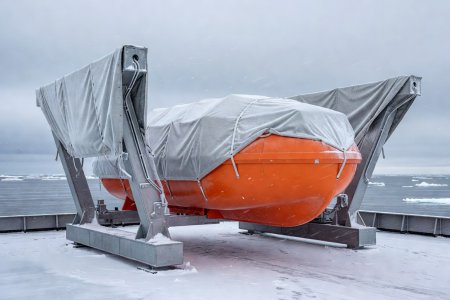
Fig 4.1 · Winterized Totally Enclosed Lifeboat
Engine block heaters, insulated double-skin GRP hulls, and heated release hooks allow deployment at the vessel's Polar Service Temperature.
Layer 01 · Operational Decision Frameworks
PWOM and the POLARIS Risk Indexing System
A Polar Ship Certificate is invalid without an approved, vessel-specific Polar Water Operational Manual (PWOM) carried on the bridge. The PWOM translates engineering specifications into concrete operational boundaries, defining the exact temperatures, ice regimes, and maximum speeds for which the ship is certified.
To prevent subjective guesswork when entering complex ice regimes, the IMO adopted the Polar Operational Limit Assessment Risk Indexing System (POLARIS). POLARIS compares the ship's assigned Ice Class (e.g., PC1–PC7 or FSICR IA Super–IC) against the WMO stages of ice development actually present ahead of the bow to compute a numerical Risk Index Outcome (RIO):
- $\text{RIO} \ge 0$ (Normal Operation): The ice regime is within the structural design envelope of the vessel's ice class. Normal polar watchkeeping applies.
- $-10 \le \text{RIO} < 0$ (Elevated Operational Risk): Permitted for PC1–PC5 vessels (and under strict limits for lower classes) only with mandatory speed limits, enhanced bridge watch, and documented ice avoidance procedures.
- $\text{RIO} < -10$ (Operation Subject to Special Consideration / Prohibited): The ice regime exceeds safe structural tolerances; the vessel must alter course or await icebreaker assistance.
Layer 02 · Subdivision & Redundancy
Ice-Damage Stability and Safe Return to Port (SRtP)
In a calm fjord filled with drift ice, the safest lifeboat is always the expedition ship itself. Modern polar passenger and research vessels are engineered around two structural survivability regimes:
Double-Hull Tank Protection and Ice-Abrasion Flooding Margins
Under Polar Code stability rules, Category A and B ships must withstand longitudinal raking damage caused by sliding along a submerged ice ledge or growler—accounting for long, shallow hull penetrations across watertight bulkheads while simultaneously carrying the topweight of atmospheric ice accretion on exposed decks ($30\text{ kg/m}^2$ on horizontal weather decks and $15\text{ kg/m}^2$ on projected lateral areas). All fuel oil and noxious liquid tanks are separated from the outer shell by double-skin cofferdams or ballast spaces so an outer plate puncture cannot cause an Arctic oil spill.
Safe Return to Port (SRtP) Machinery Separation
Rather than placing all main diesel generators in a single engine room, high-specification expedition ships divide their power generation, switchboards, fuel day tanks, propulsion converters, and freshwater/heating boilers into two completely independent longitudinal or vertical fire and flood zones separated by A-60 insulated watertight bulkheads. If a fire or hull breach disables Engine Room No. 1, Engine Room No. 2 maintains propulsion, steering, navigation electronics, and hotel heating so passengers and crew remain warm onboard while steaming to a safe refuge.
Layer 03 · 120-Hour Cold Survival
Lifeboats, Immersion Suits, and Survival Kits
If catastrophic events ever force vessel abandonment in polar waters, standard SOLAS liferafts (tested for 24-hour temperate rescue) are insufficient against hypothermia, frostbite, and ice crushing. The Polar Code mandates equipment engineered for the vessel's Minimum Expected Time of Rescue—never less than 5 days (120 hours).
Polar-Rated Enclosed Lifeboats
Open lifeboats are prohibited on polar vessels. Survival craft must be partially or totally enclosed, fitted with electric engine-block and battery heaters powered from the ship's emergency switchboard while stowed, and stocked with low-pour-point Arctic diesel fuel, double-pane heated helmsman windows, and positive-pressure ventilation adjusted to retain occupant body heat without $\text{CO}_2$ buildup.
Insulated Immersion Suits & PSKs
Every person onboard is assigned an insulated immersion suit (thermal conductivity meeting ISO/SOLAS polar standards, not uninsulated anti-exposure suits) plus a Personal Survival Kit (PSK) in a waterproof carry bag containing windproof outer garments, thermal base layers, insulated boots, face mask, snow goggles, mittens, and chemical hand warmers.
Group Survival Kits (GSKs)
Packaged in floating, towable rigid containers configured to be dragged onto fast ice or large floes, GSKs hold wind-resistant polar dome tents, closed-cell insulating floor mats, subzero sleeping bags, multi-fuel snow-melting stoves, 5 days of high-calorie rations and water per person, spare VHF transceivers, and 406 MHz EPIRBs with lithium batteries rated for −40 °C.